5 Best Practices to Reduce Healthcare Accounts Receivable

Growing accounts receivable is often a symptom of problems that occurred much earlier in the revenue cycle. Missed prior authorizations, inaccurate insurance verification, incomplete clinical documentation, coding errors, and unresolved claim issues can all contribute to delayed or unpaid reimbursement. To reduce healthcare accounts receivable, organizations need to look beyond back-end collection efforts and address the upstream workflow gaps that cause accounts to age in the first place.
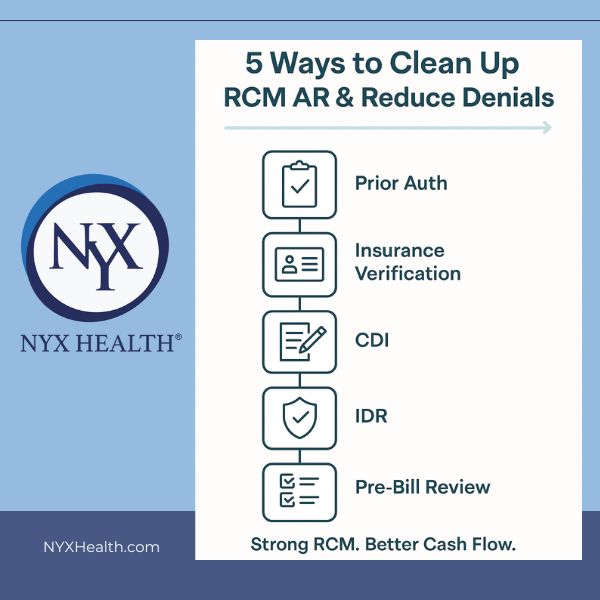
Here are five proven best practices to help clean up your RCM AR, reduce denials, and drive financial performance.
1. Start Prior Authorizations Early
Prior authorizations (PAs) are one of the biggest hurdles in claims processing. When they aren’t completed on time—or at all—services can be delayed or denied entirely, creating frustration for both patients and providers.
How to improve:
- Build workflows that trigger PA requests as soon as a procedure is scheduled.
- Leverage technology to track authorizations and send reminders before expiration.
- Educate staff on payer-specific requirements to reduce avoidable errors.
Getting ahead of prior authorizations helps prevent downstream bottlenecks and ensures patients receive care without unnecessary interruptions.
2. Verify Insurance Before Scheduling
Insurance eligibility errors are a common source of denied claims and unexpected out-of-pocket costs for patients. Verifying coverage before scheduling reduces these risks and allows staff to address any issues early.
How to improve:
- Check patient coverage at the time of appointment request, not on the day of service.
- Confirm benefits, co-pays, and pre-authorization requirements with payers.
- Train front-desk teams to communicate coverage details and potential patient costs clearly.
This upfront step creates a smoother experience for patients and protects your organization from revenue loss.
3. Improve Clinical Documentation & Strengthen Coding Accuracy
Incomplete or unclear documentation can result in coding errors, underpayments, or claim denials. By focusing on Clinical Documentation Improvement (CDI), providers can ensure coding reflects the complexity of care delivered.
How to improve:
- Engage CDI specialists to review charts for completeness and accuracy.
- Provide ongoing training to physicians on the importance of specific, detailed charting.
- Implement real-time alerts in your EHR to flag missing or ambiguous information.
A strong CDI program not only supports compliance but also captures appropriate reimbursement for services rendered.
4. Utilize IDR for Out-of-Network Claims Under the No Surprises Act
Out-of-network claims often lead to delayed payments or disputes between providers and payers. The No Surprises Act introduced the Independent Dispute Resolution (IDR) process to help settle these cases fairly.
How to improve:
- Identify out-of-network scenarios early and communicate coverage details to patients.
- Assemble documentation—including charge data and provider credentials—to support IDR submissions.
- Monitor deadlines closely to avoid missed reimbursement opportunities.
Using IDR effectively can help recover lost revenue and protect your organization from uncompensated care.
5. Conduct Pre-Bill Reviews to Catch Errors Before Submission
Even small mistakes on a claim can lead to costly denials or delays. A pre-bill review process allows physicians to review documentation and coding before claims are submitted.
How to improve:
- Establish a workflow for physician review of key billing elements, including diagnosis codes, modifiers, and medical necessity.
- Use checklists to ensure all required information is present and accurate.
- Provide regular feedback on common errors to drive continuous improvement.
This step adds a layer of quality control that can dramatically increase first-pass claim acceptance rates.
Ready to Clean Up Your AR?
Reducing aging A/R requires more than working outstanding accounts after payment has already been delayed. Healthcare organizations can reduce accounts receivable by strengthening processes throughout the revenue cycle, from insurance verification and prior authorization to clinical documentation, coding, claim submission, and follow-up. Addressing issues earlier helps prevent avoidable denials, reduce rework, accelerate reimbursement, and create a more sustainable revenue cycle.
At NYX Health, we specialize in helping healthcare organizations simplify their revenue cycle processes and improve financial outcomes. From prior authorization support and insurance verification to CDI programs, our team can help you reduce denials and maximize reimbursements.
Get Started Today!
Ready to simplify operations, boost revenue, and get back to what matters most-patient care?
Partner with NYX Health and experience the difference.